
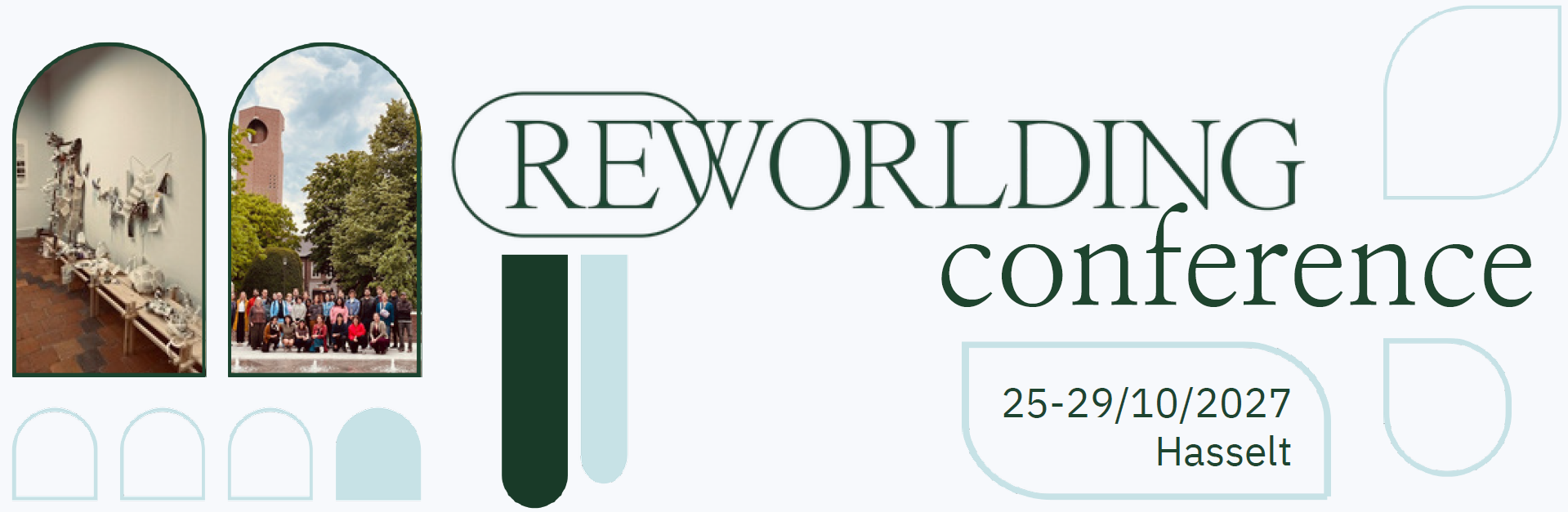
Call for contributions
TRACK INFORMATION
The call for contributions is organised around three interconnected tracks, each exploring a different perspective on how we can collectively redesign our worlds in times of socio-ecological crisis. Together, they examine how we understand and engage with the everyday realities of socio-environmental change, how we build on shared memories and practices of care, and how we rethink the institutions and infrastructures that shape our collective futures.
Each track brings together specific themes, questions and approaches to design research and practice. We welcome contributions that engage with these topics from different disciplinary, geographical and methodological perspectives. While the tracks offer distinct points of entry, they are not intended as rigid categories. Contributions may connect multiple tracks or explore questions that extend beyond their specific themes.
Explore the three tracks below to discover their focus, key topics and submission opportunities
Track 2: (Re)building Memories
FORMATS
We welcome different ways of contributing to the conference within each of the three tracks. Recognising that knowledge can be developed and shared through different forms of research, reflection and practice, the conference invites contributions ranging from reflective writing and practice-based work to exhibition and collective experimentation.
Contributors are invited to select the format that best reflects the nature of their contribution. The different formats are intended to create space for academic reflection as well as situated, material, visual and practice-based forms of knowledge. Each contribution type is described below, including the expected format and word limit:
1. Reflective paper
An extended abstract of approximately 2000 words, reflecting on field work in relation to the tracks above, ranging from methodological, epistemological and reflective essays, to case study and pieces of ethnography. Visual and pictorial forms are welcome within this format: photo essays, visual diaries, mapping work or other image-led accounts of fieldwork are treated as reflective papers and reviewed on the same terms.
It will be presented in a 15-minute talk, followed by 5–10 minutes of moderated discussions.
2. Practice-based paper
A shorter contribution (approx. 1000 words) for practitioners presenting a concrete case or practice related to the themes above, without the expectation of full academic framing.
It will be presented in a 10-minute talk, followed by 5 minutes of moderated discussions
3. Work/artefact for exhibition
An exhibition artefact can be an installation or an object (one or a series of images, drawings, sounds, etc.) that are relevant to more-than-human practices articulated in the tracks mentioned above. It will be submitted as a piece for the exhibition and presented during an exhibition tour. A short description of the object, as well as proposed format (photo, object, sound, etc.) and dimensions are required.
4. Work + participatory workshop
An exhibited work accompanied by a short activation you propose and facilitate during the conference week.
Workshop duration (max two hours) and format are proposed by the submitter as part of the application.
Important dates
Submission deadline: 17 March 2027
Notification of acceptance and reviews: 7 May 2027
Revised abstract / final contribution: 11 June 2027
Final acceptance / programme confirmation: 25 June 2027
Registration opens: 1 July 2027
Early bird registration deadline: 31 August 2027
Author registration deadline: 17 September 2027
Final programme / practical information: 1 October 2027
Conference: 25-29 October 2027
Submission Guidelines
Contributions can be submitted in one of the four formats described above. Detailed submission guidelines and the submission system will be available shortly.
Language: English.
Publishing Opportunities
Selected contributions may be invited to develop their work for publication through one or more REWORLDING publication initiatives, including an edited open-access volume and journal special issues. Further information will be provided to accepted contributors.
Review process
Reflective and practice-based papers will undergo double-blind peer review. Submitted papers must therefore be anonymised.
Exhibition and workshop proposals will be reviewed by the track's exhibition/workshop chairs.
Evaluation criteria:
Papers
- clarity and quality of communication
- originality
- quality of research and argumentation
Exhibition/workshop
- clarity and feasibility
- experimental ambition
- relevance to the track and conference themes
Participants
The event will be of special interest to:
- Researchers and educators working on participatory, more-than-human and situated design methods for socio-ecological transitions;
- Doctoral, master's and other design, architecture and urban planning students and early-career researchers interested in retracing everyday socio-environmental practices, building differently, or redesigning policy and governance;
- Policymakers and government officials - at municipal, regional or national level - involved in socio-environmental governance, planning or transition policy;
- Collectives, cooperatives and grassroots initiatives already engaged in situated ecological, agricultural, care or community practices, and interested in bringing their work into dialogue with design research;
- Architecture, construction and design-sector practitioners and industry partners collaborating with universities and collectives on material, building and infrastructural practices
- Designers, artists and makers working with body-related, material and/or speculative practices (e.g. wearables, costume, textile, object and jewellery design), who are interested in situating their work within socio-ecological transitions.
- Non-governmental and civic organisations focusing on more-than-human governance, socio-ecological justice or community-led transitions.